Opening Session
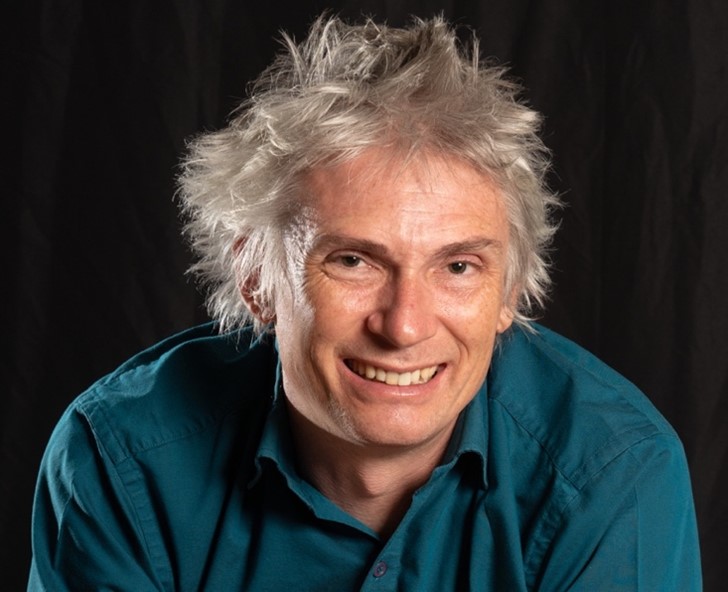
Dr. Henry Throop
NASA’s Planetary Science Program and Plans for Planetary Probes
Henry Throop is a Program Scientist in the Planetary Science Division at NASA Headquarters in Washington, DC, where he manages NASA’s research programs in the outer solar system. Henry is the NASA POC for the Outer Planets Assessment Group (OPAG), and leads NASA’s Planetary Mission Senior Review (PMSR).
Throop’s research focuses on the outer solar system, and he has published over 40 articles in scientific journals, on topics ranging from to planetary rings, to planet and star formation, to astrobiology and the origins of life, to searching for (and co-discovering) Pluto’s smallest moon, Styx, in 2012. Throop is an expert in the analysis and modeling of planetary rings, including the dusty rings of Jupiter and Saturn, and searches for rings at Pluto and Arrokoth. Throop was a member of the science team for NASA’s New Horizons mission and was involved in its historic encounters with Pluto in 2015 and MU69 Arrokoth in 2019.
Throop graduated from Grinnell College with a BA in Physics in 1994. He has a MS and PhD in Astrophysical, Planetary, and Atmospheric Sciences from the University of Colorado. Throop has previously held faculty appointments at St. Xavier’s College (Mumbai, India), the University of Pretoria (South Africa), the National Autonomous University of Mexico (Mexico City), and the University of Colorado (Boulder). He has been awarded the American Astronomical Society’s Carl Sagan Medal for Excellence in Public Communication in Planetary Science.
Science

Dr. Kristin S. Sotzen
Johns Hopkins University Applied Physics Laboratory
« The Dragonfly Geophysics and Meteorology Package: Exploring Titan’s Atmospheric, Interior, and Surface Processes »
Dr. Kristin Sotzen is a space systems engineer and planetary scientist at the Johns Hopkins University Applied Physics Laboratory (APL). She is currently serving as the Instrument Scientist and Systems Engineer for the Dragonfly Geophysics and Meteorology Package for NASA’s Dragonfly mission to Saturn’s moon Titan. As a space systems engineer, she has worked in concept development, architecture evaluation, and interface definition for a variety of space systems and missions. Dr. Sotzen is also the Science PI for NASA’s “Estimating Exoplanet Population Demographics with Planetary Infrared Excess” XRP program, a co-investigator/collaborator on several JWST exoplanet observing programs, and a co-investigator on NASA’s “The M-dwarf Opportunity: Characterizing Nearby M-dwarf Habitable Zone Planets” ICAR program. Her research focuses on the characterization of exoplanet atmospheres using transmission and emission spectroscopy.
Dr. Sotzen holds a BS in Engineering Physics from Embry-Riddle Aeronautical University and an MS in Applied Physics from Johns Hopkins University. She earned her Ph.D. in Earth and Planetary Sciences from Johns Hopkins University in Baltimore.
Innovative Concepts for Exploration

John Nelson
Deputy Program Executive in the Space Technology Mission Directorate at NASA Headquarters
John Nelson is a Deputy Program Executive in the Space Technology Mission Directorate (STMD) at NASA Headquarters, specifically providing strategic and operational leadership for NASA Innovative Advanced Concepts (NIAC), Center Innovation Fund (CIF), and Early Career Initiative (ECI). As part of STMD’s Early-Stage Innovation and Partnerships (ESIP) portfolio, these programs empower a community of innovators in pioneering aerospace research and transformative technology ventures.
Prior to joining NASA in 2022, Mr. Nelson worked in private industry for over 25 years, helping to ensure the success of science and technology programs across NASA and other agencies through sound strategic planning and portfolio management. This included 10 years of leading award-winning teams across STMD programs and initiatives. John received his bachelor’s degree in biology from Louisiana State University and his master’s degree in biomedical engineering from the University of Virginia.
Earth Return

Christine Szala
“Overview of the Mars Sample Return Earth Approach, Entry, Descent, and Landing Phase”
Christine Szalai is an Entry, Descent, and Landing (EDL) Systems Engineer in the EDL Systems and Advanced Technologies Group at JPL. She is currently the Mars Sample Return Earth Approach, Entry, Descent, and Landing Phase Lead.
Venus

Thomas Voirin
EnVision Study Manager (ESA)
EnVision: ESA:s next medium class mission to Venus
Thomas Voirin is since 2018 the study manager of ESA’s EnVision mission, the newly selected Medium Class mission in the ESA Cosmic Vision science programme.
Thomas started his career at Airbus Defence & Space in 2003, developing and validating agile guidance and control algorithms for the French Earth Observation satellite Pleiades. Thomas joined ESA’s Technical Directorate as Guidance, Navigation and Control system engineer in 2008. In this function, Thomas supported as AOCS/GNC architect several science and exploration studies, including Lunar Lander, JUICE, and CHEOPS, and also actively developed autonomous navigation technologies for exploration and launchers, leading to several flight experiments including GNSS in-flight experiment on Ariane 5. In 2011 he joined the ESA LISA pathfinder team as drag free control performance manager. In 2014 Thomas was appointed System Engineer in ESA’s Science Directorate, where he managed several mission studies, including Inspire (2014), Clipper CLEO study (2015), Phobos Sample Return (2016), and THOR (2017). Thomas holds a Master’s degree from the Ecole Polytechnique of Palaiseau France, and a Space System’s Engineering degree from Supaero, Toulouse, France.
Aerocapture, Entry, Descent and Landing
John DiNonno
NASA Langley Research Center (LaRC), Chief Engineer, Low-Earth Orbit Flight Test of an Inflatable Decelerator (LOFTID)
“Low-Earth Orbit Flight Test of an Inflatable Decelerator (LOFTID) Mission Overview, Science Return, and Future Applications of this Technology”
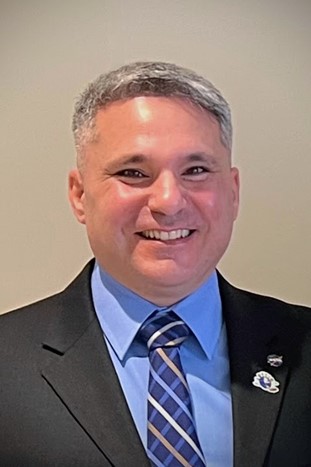
John DiNonno is an Aerospace Engineer at NASA Langley Research Center in Hampton, Virginia, and since 2017 has served as Chief Engineer for the LOFTID project, culminating in the successful first orbital reentry of an inflatable heat shield. John began his career working on a broad range of unique concept-to-hardware flight and research projects at a small aerospace company. He joined NASA in 2006 to lead the mechanical design for the full-scale Orion Pad Abort 1 Flight Test Article project, which successfully flew on May 6, 2010. He then served as the Reentry Vehicle Lead on the Inflatable Reentry Vehicle Experiment 3 (IRVE-3) project. After its successful sub-orbital sounding rocket flight test on July 23, 2012, he led technical integration for the Hypersonic Inflatable Aerodynamic Decelerator 2 (HIAD-2) project, which involved developmental testing and flight opportunity studies for HIAD technology. John continues his support of the LOFTID project overseeing the final data review, correlation, and analysis, as well as guiding the technology and development efforts of the HIAD Portfolio and the numerous LOFTID follow-on projects.
Dr. F. McNeil (Neil) Cheatwood
NASA Langley Research Center (LaRC), Senior Technologist for Planetary Entry, Descent, and Landing
“Low-Earth Orbit Flight Test of an Inflatable Decelerator (LOFTID) Mission Overview, Science Return, and Future Applications of this Technology”
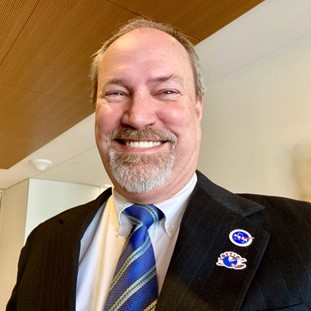
Dr. Neil Cheatwood has played key roles in NASA’s planetary atmospheric flight efforts for the past 30 years and is currently the Agency’s Senior Technologist for Planetary Entry, Descent, and Landing (EDL). In this role, Neil leads NASA’s efforts to develop Hypersonic Inflatable Aerodynamic Decelerator (HIAD) technology and has overseen and directed the technology development as the Principal Investigator (PI) for multiple projects including the Program to Advance Inflatable Decelerators for Atmospheric Entry, the HIAD Project, the Inflatable Reentry Vehicle Experiment (IRVE) flight tests, and the Low-Earth Orbit Flight Test of an Inflatable Decelerator (LOFTID). Neil was also the PI for the Mars Science Laboratory EDL Instrumentation (MEDLI) project, with a Mars entry in 2012. Earlier, Neil served as the EDL PI for NASA’s Space Technology Mission Directorate, and prior to that he was the Hypersonics Project Scientist for NASA’s Aeronautics Research Mission Directorate where he defined an investment portfolio including the inflatable aerodynamic decelerator, supersonic retro-propulsion, and advanced ablative thermal protection system technologies.
Ice & Gas Giants
Ethiraj Venkatapathy
NASA Entry Systems Senior Technologist
“A Multi-Probe Mission at Jupiter is Within our Reach!”
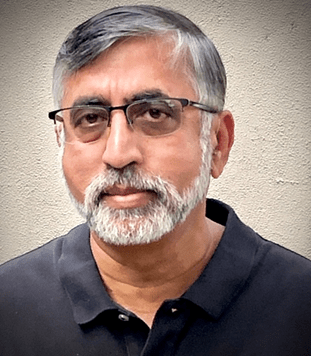
Ethiraj Venkatapathy (“Raj”) has been, for the past five years, NASA Senior Technologist for the Entry System Technologies. He is also the Chief Technologist, Entry Systems and Technology Division at NASA Ames and has been for the past 20+ years. Currently his focus is on enabling aerocapture, addressing the thermal protection system (TPS) needs of the commercial space industry and mentoring the next generation of technologists.
Between (2010 – 2019), Raj led NASA’s advanced TPS development successfully by leveraging 3-D weaving. The multi-functional ablative TPS (3DMAT) developed in 2015, enabled Orion Lunar mission design and was successfully tested on Artemis-1. 3DMAT was selected as the NASA innovation of the year award (2023). Raj also led the development of the Heatshield for Extreme Entry Environment Technology (HEEET). The dual-layer HEEET is baselined for future Venus, Saturn, and Ice Giant missions. A variant of HEEET is currently the TPS of choice for Mars Sample Return Earth Entry System. He is also the inventor of the deployable heatshield called ADEPT that leverages 3-D weaving.
Raj was the flight system manager for the Orion advanced TPS development project (2005-2009). Before joining NASA in 2002, as the President and Director of Research for ELORET, a small company, Raj led a group of researchers supporting NASA Ames, across many disciplines, for 20+ years.
He has been recognized by many organizations for his contributions. He was the IPPW’s Al Seiff Award winner in 2022. He received NASA’s Outstanding Leadership Medal twice (2007, 2010), Exceptional Technology Achievement Medal (2012), “NASA Game Changer of the Year” award (2015) and “STMD Leadership” award (2015) for providing NASA and the Nation with revolutionary new technologies and capabilities. He is an Associate Fellow of AIAA and Associate Fellow of NASA Ames Research Center.
He received his B.Tech. in Aeronautical Engineering from Indian Institute of Technology Madras in India and his Ph.D. in Aerospace Engineering from Iowa State University, Ames, Iowa in 1982.
Mars
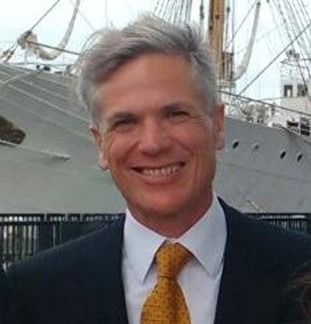
Dr. Jorge L. Vago
ExoMars Project Scientist (ESA)
“Searching for Life on Mars with the Rosalind Franklin Rover”
Jorge was born in 1962 in Buenos Aires, Argentina. He obtained a Bachelor of Engineering and Electrical Engineering degrees at the Instituto Tecnológico de Buenos Aires (ITBA). In 1986 he enrolled in Cornell University (Ithaca, NY), where he completed a Master of Engineering in Applied Physics and a Ph.D. in Space Plasmas and Planetary Physics. Since 1992, he is with the European Space Agency in the Netherlands. Initially, he started working on multi-point plasma turbulence analysis in support of the Cluster mission. This was followed by a few years of project management, mainly developing physics experiment laboratories for Russian capsules and for the International Space Station. Jorge is ESA’s ExoMars Project Scientist. He is the interface for the investigator communities interested in the ExoMars Program. He also helps with other ESA activities in the international Mars exploration context, such as the Mars Sample Return mission. In addition, his work includes representing the ExoMars science objectives at programmatic level and contributing to science mission and payload definition.
Priorities and challenges for the international planetary probe community
Space agencies are subject to regular surveys for prioritisation and planning of future missions. Notable recent examples are the 2022 Planetary Science and Astrobiology Decadal Survey in the United States, the Terrae Novae 2030+ Strategy Roadmap in Europe, and the Voyage 2050 Programme, also in Europe. For implementation, these mission priorities have to be reconciled with the relevant constraints of funding cycles, technological readiness, available launch windows and (in many cases) interfaces with international partners. This panel will bring together agency representatives to explain where things currently stand in their programmes and offer their perspectives on priorities and challenges for the international planetary probe community in the coming years. The audience will have an opportunity to ask questions of the panelists after hearing their opening remarks.
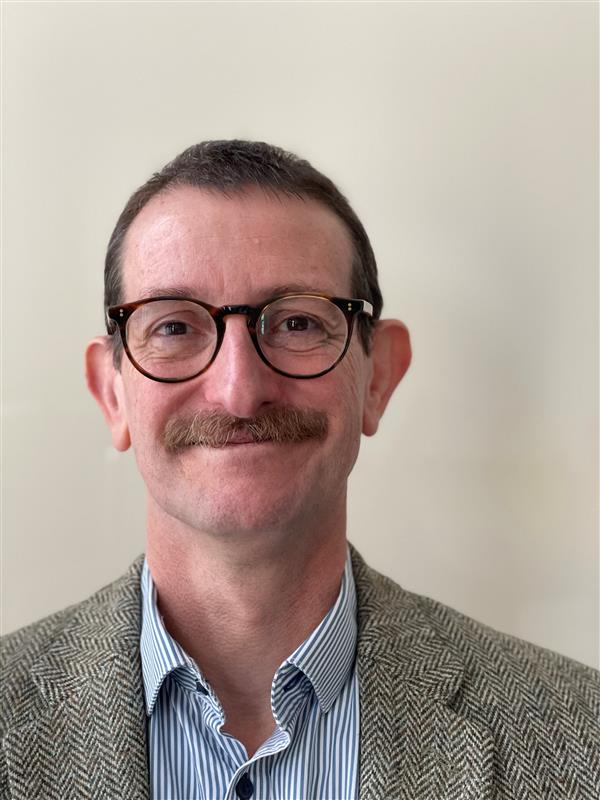
Albert Haldemann
ESA – ESTEC | Mars Chief Engineer, Mars Exploration Group
Albert Haldemann is Mars Chief Engineer in ESA’s Mars Exploration Group, supporting ESA’s partnership with NASA for both the ExoMars Rosalind Franklin Mission, and the Mars Sample Return Program.
Albert has international experience in space project and program implementation, management and operations from work on five of the ten spacecraft attempting to land on Mars since 1997. Albert obtained his Ph.D. in Planetary Science from Caltech in 1997, after a Diplôme de Physicien from the University of Neuchâtel in Switzerland, where he was also a jet pilot in the Swiss Air Force. He worked at the Jet Propulsion Laboratory from 1997 to 2007 in various roles, including as Senior Engineer in the Communication, Tracking and Radar Division, as Deputy Project Scientist of the Mars Exploration Rovers Spirit and Opportunity, and as Deputy Section Manager of the Planetary Science Section within JPL’s Science Division.
Albert joined ESA in 2007 as the Payload and AIV Manager for the ExoMars program. In that role, he has overseen the development, delivery, and system-level testing of four flight instruments to the Trace Gas Orbiter and one payload suite to the Schiaparelli lander for ExoMars 2016, as well for the nine flight instruments to the Rosalind Franklin Rover for ExoMars 2022. He supervised all ExoMars integration, testing, and verification for ExoMars 2016, and, in cooperation with Russian partners, for ExoMars 2022. During the ExoMars 2016 Launch Campaign in Baikonur he briefly served as ESA’s launch campaign manager.
Albert is a space exploration enthusiast, convinced that what humans learn from getting to Mars, and on Mars, is a mirror to examine our existence on Earth. He enjoys cycling, dog walking, and travel.
Prof. Luigi Colangeli
ESA – Science Directorate
Luigi Colangeli is presently acting Head of the Strategy, Planning and Coordination Office in ESA’s Directorate of Science. Since 2010, when he joined ESA, he has been Head of the Solar System Division (2010-2013), Head of the Science Coordination Office (2013-2021), and Programme Advisor for the Director of Science (2021-2023).
Before entering ESA, Colangeli has worked on the design and realisation of instruments for space missions dedicated to the exploration of the solar system. Among other responsibilities he has been Principal Investigator of the GIADA experiment on board the ESA mission Rosetta (until 2010) and Co-Principal Investigator of the SIMBIO-SYS experiment on board the ESA mission BepiColombo (until 2010).
Research activities have focused also on the study of physical, chemical, morphological and structural properties of solid materials present in different space environments (interstellar, circumstellar and interplanetary media, solar system bodies) through laboratory experiments on samples produced by synthetic experimental techniques and/or on natural rocks and minerals, relevant to simulate space materials and on the study of extraterrestrial samples (e.g.: meteorites, interplanetary dust, cometary samples).
He has published more than 380 papers, of which more than 190 on main refereed astrophysical journals.
Colangeli graduated in Physics in 1982 (University of Lecce, Italy) and has a PhD in Physics (1986). He has been researcher in Physics at University of Cassino, Italy (1988-1993), Associate Astronomer (1993-2001) and Full Professor (since 2001) at the Astronomical Observatory of Capodimonte in Naples.
Among other institutional responsibilities, he has been Director of the Astronomical Observatory of Capodimonte in Naples (2005-2010).
 IPPW 2023